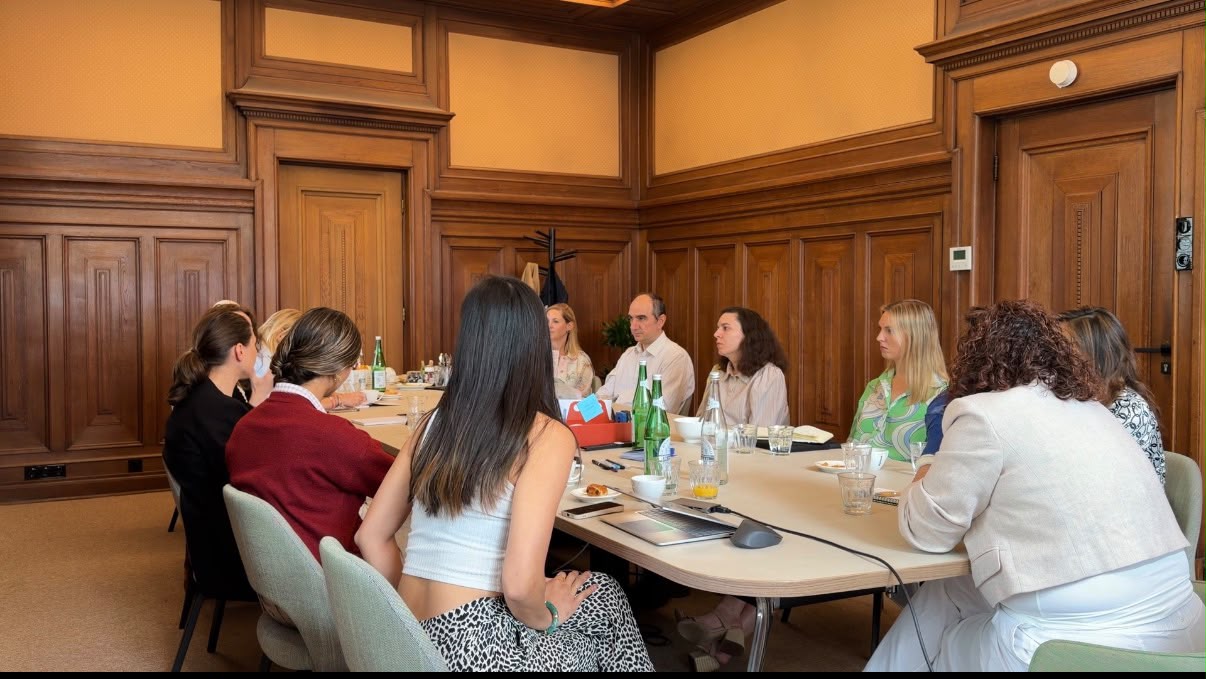
We brought together a group of 12 senior leaders from across tech, product, HR and advisory for a WomenWise roundtable in Amsterdam. The topic was simple: women and AI, but the conversation was anything but.
We came back to one central idea: AI is not a technology discussion. It’s a people discussion. And perhaps the biggest challenge organisations face isn’t adopting AI, it’s creating the culture, leadership and capability to help people use it well.
Senior women are often ahead in AI adoption because they’ve learned how to adapt
This statistic didn’t surprise anyone in the room, why? Because women have spent their careers adapting, learning faster, and proving themselves more often. It’s not because we’re more technical, it’s because we’ve become used to creating our own opportunities rather than waiting for them.
The problem is, as senior women lead the charge in AI adoption, this isn’t trickling down to our junior counterparts, and this isn’t because junior women aren’t capable, it’s because organisations haven’t created the conditions for strong and consistent AI use.
Organisations are falling into the “messy middle”
Since AI technology is constantly evolving, no one is an expert on it yet, so the frameworks around how to use AI properly are not yet embedded into our organisations, and this is where we see our organisations and the people within them fall into the “messy middle”. The result?
People are hiding their AI use for fear of looking incapable
Because there are often no company guidelines or frameworks on AI usage, many people don’t know when using AI is appropriate, or if anyone else in their team is using it too. It creates a fear culture:
“If I tell them I’m using AI, does that mean I’m not capable enough to write those things or finish those tasks?”
Adding a simple disclaimer acknowledging when AI has contributed to your work, or by being open about how you’ve used it could help to combat that fear culture. But people won’t feel comfortable doing this without clear and consistent guidance from leadership on how and when to use AI.
One attendee told us about a female CEO, who hosts a townhall meeting with all employees to share her failures, learnings and experiments with AI. She hosts this townhall every single week and by doing cultivates an open and positive culture around AI, that it’s okay to make mistakes and it doesn’t mean you’re incapable.
Who owns AI, and who is missing from the room?
One attendee shared how her company created an AI Lab tasked with shaping internal AI adoption. The group ended up entirely male. Not because women weren’t interested. Because the men who volunteered were given time and capacity to participate. When she expressed interest, the response was essentially: “Great, you can do that too.” But there was no discussion about creating space in her workload.
It’s a reminder that, if the same voices are always in the room, we’ll continue building the same systems that don’t meet the needs of everyone, equally.
Judgement in the new critical skill
The people leading the way with AI aren’t necessarily the most technical, they’re the most experienced.
“The people who are best with AI, I’m actually starting to see now, are the aged 50+, because they have the judgement.”
One of our attendees explained that people with decades of experience can look at an AI-generated output and instinctively critique it or refine it. They’ve spent years building a bank of knowledge through problem-solving, making mistakes and learning from failures, and this isn’t something you can plug into a GPT.
“Judgment comes from actually doing the work yourself, failing, going through the hardships.”
Inevitably, the groundwork, like the research and analysis that once took hours to develop but can now be churned out in a few minutes. But the people who haven’t had the experience building those foundations, aren’t developing the skills they need to critically judge an AI output. The same is true for generating new ideas: if you have years of experience and original thinking, AI can help provide a seed of an idea for you to amplify. But if you don’t, AI simply gives you a better version of what’s already out there.
So, what should AI automate? what should stay human?
There are many strong examples of where AI just isn’t making the cut, including in recruitment, where systems are often rejecting strong candidates before they reach human review. Why not, when you can simply plug your hiring requirements into a GPT and save lots of time? AI is full of bias; it reflects the people, cultures and data that’s been inputted into it, so the people who sit outside of the dominant data set become less visible. The result is that candidates become averages rather than individuals, and in doing so, we risk losing the diversity of thought and experience that organisations are trying to build.
“One of the risks with AI is that we all become averaged.”
So perhaps the most important AI question is what we deliberately choose to keep human? The human judgement, creativity, relationships, critical thinking, the ability to challenge an output rather than accept it. This question isn’t driven by fear that AI will take our jobs, it’s driven by a concern that organisations aren’t yet creating the conditions for people to learn how to work well alongside it.
“AI is not going to take your job. People who know how to use AI are going to take your job”
The organisations that succeed won’t simply be ones that adopt AI the fastest. They’ll be the ones that give their people the confidence, capability and judgement to use it well.
If this resonates, WomenWise is the community where these conversations happen year-round – not just when it makes headlines. Want to get involved or partner with us? Get in touch here.
Follow us on LinkedIn for more
This write-up was contributed by Amy Bennett, WomenWise volunteer
Amy is a medical writer and WomenWise volunteer. As a woman in STEM herself, she’s passionate about creating content that lifts and empowers women in the workplace.
Share this: